
Buddhism KS3 & KS4 Modules
We are always keen to visit secondary schools in any part of UK and Ireland. If you are teaching in a secondary school and would like to initiate Eastern R.E. lessons, a BHS workshop will be very effective in creating a solid base interest for your students.
Other R.E. Subects
For modules on more topics please visit our main website www.funlearningworkshops.com
Workshop Capacity:
The typical attendance for a full-day workshop averages just over 240 students; however, we have the capacity to accommodate up to 400 participants, although this would necessitate a reduction in interactive activities within shorter sessions.
GCSE and A-Level Lessons:
A diverse array of presentation formats is available to enhance your students' educational experience. Experiential learning remains invaluable, and numerous secondary educators favour modules that integrate lectures and discussions alongside interactive cultural experiences. Conversely, some environments may require a more traditional lecture format accompanied by standard question-and-answer sessions. Regardless of your specific requirements, we are equipped to facilitate a wide range of events, encompassing introductory workshops, GCSE and A-Level sessions, as well as interfaith conferences.
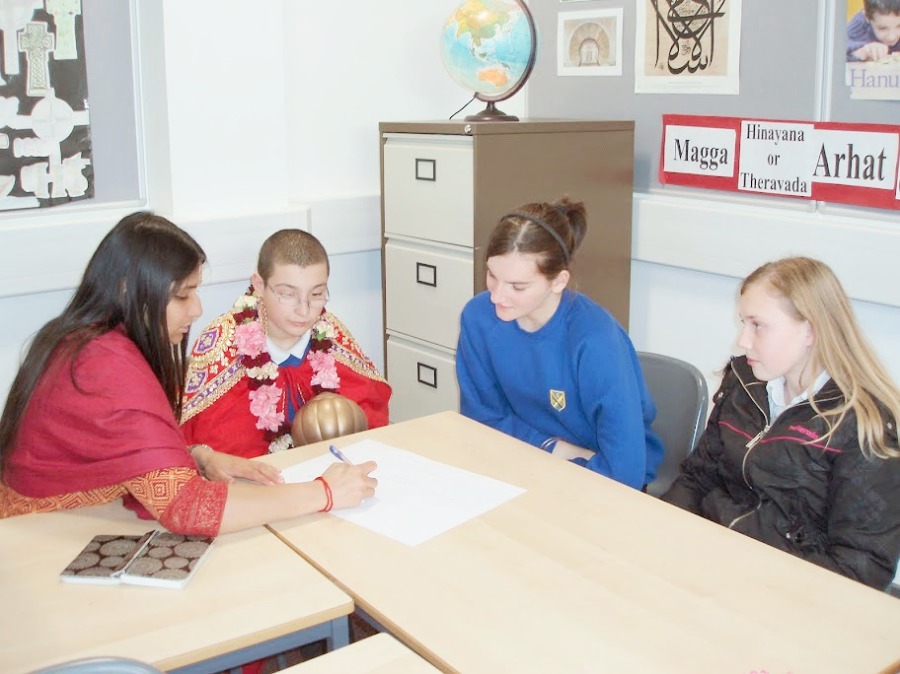
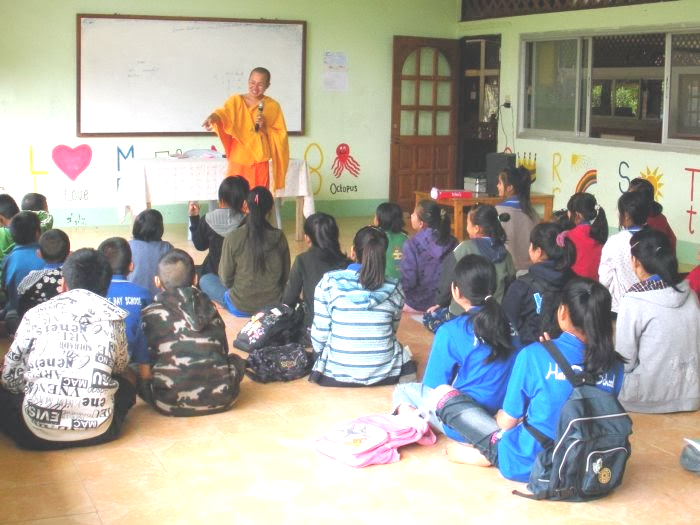
Lectures
Attending a lecture centred on critical thinking inevitably prompts numerous inquiries. A speaker from BHS consistently promotes challenging questions that stir intellectual curiosity. This approach facilitates a deep comprehension of the subject matter.
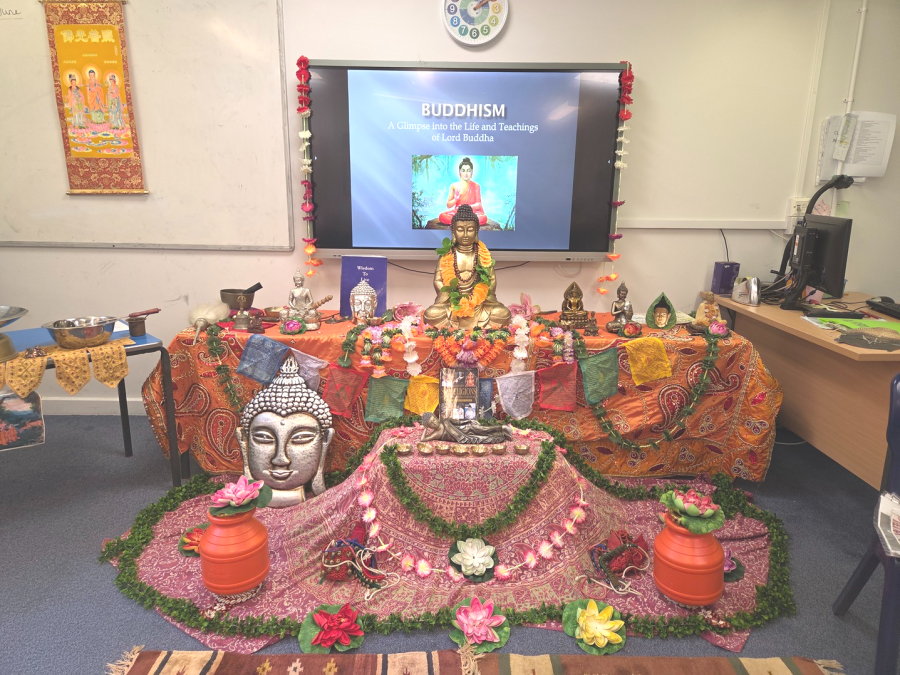
Temple Displays
The above display accommodates the presentation of the Buddhism subject. We can either present a single R.E. topic at a time or display all up to 3 concurrently.
It is advantageous to concentrate on one subject during a lesson, as this approach facilitates a thorough examination of the associated beliefs and practices.
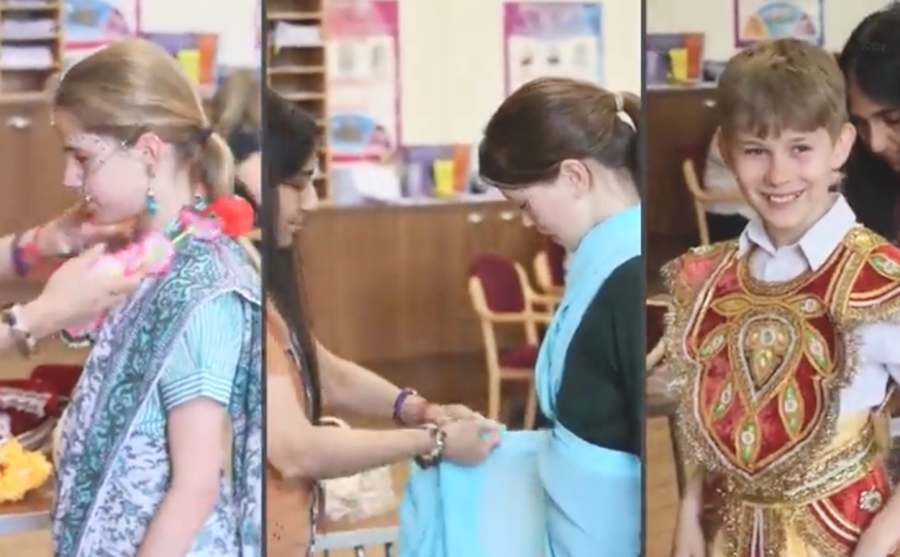
Dressing Up
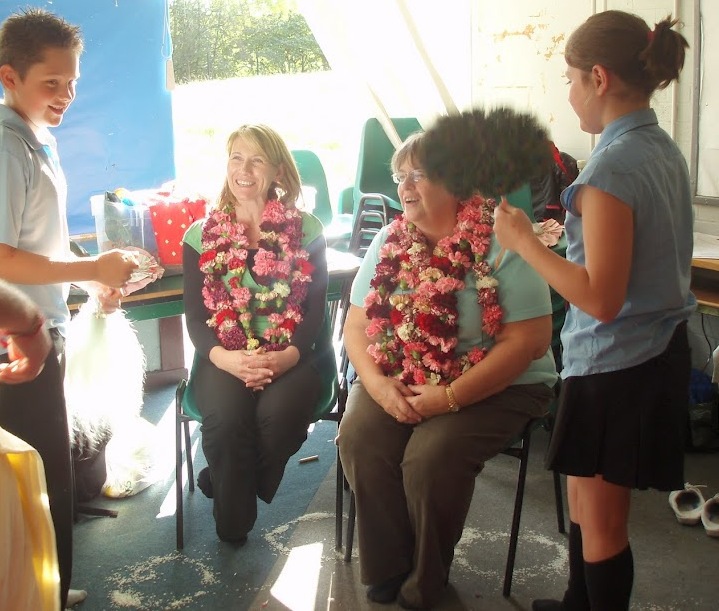
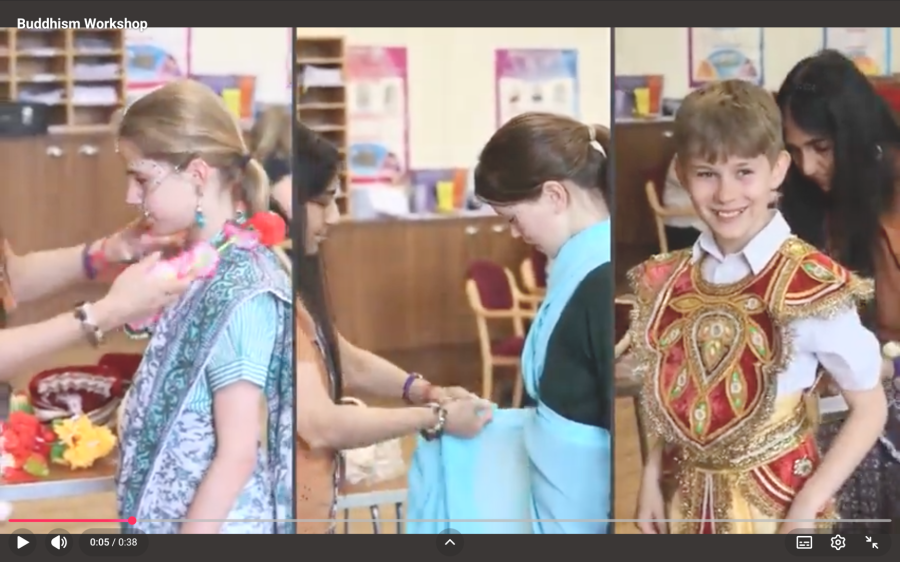
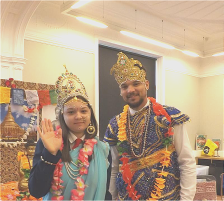
Even though secondary students are more self conscious, they still enjoy getting dressed up as characters from historical episodes that took place hundreds and thousands of years ago. These two GSCE girls were having a great time dressing up as Hindu goddesess.
Critical Thinking Module:

This secondary school session is also know as nyaya (method of thinking),  which is comprised of three elements:

1.  Curiosity: (Jijnasu), an inherent nature common to humans and even to the lower species.  This natural phenomena is ultimately meant to lead one to research into the purpose of existence.  Athato brahma jijnasa, "Now (that I am a human), is time to enquire into the Absolute Truth".  (Vedanta Sutra 1.1)

2.  Skeptisism: (Pariprashna), having a healthy questioning attitude and not blindly believing everything everyone tells you.  This part of the lesson teaches us how there is a difference between submissive questioningand egotistic challenging. This is an art which is tempered by the third element.

3.  Humility: (Dhainya), is the key too unlocking the door of understanding things as they are, rather than as we interpret them to be through the fickle mind and imperfect senses.  The Vedic antonym of humility is 'Atmavan manyate jagat' - 'One sees all other like oneself'.
On a tight budget this Spring?
Can't afford the coach to visit a Temple, Mandir or Gurudwara?
BHS Edu can visit you instead!
Too much risk assessment, pupil letters and other logistics to deal with?
Why not have our Virtual Visit to your school and cut your costs by up to 80%, save headaches, letter writing and reduce the risks!

"The prime purpose in this life is to help others. If we can't help them, at least don't hurt them!"


 Print
Print 